

Perilous Timers Are Here To Stay. Are You Ready?
2 Tim 3:1-17
I grew up in a time when hair bands of the 80 and 90's ruled the main stage of my life. None of this Justin Bieber, Lady Gaga or Katy Perry corporate garbage, no talent, corporate sell outs. I grew in a generation of talented musicians who could rock like there was no tomorrow. Bands like: Kiss, Motley Crue, Whitesnake, Ozzy, and Scorpion's. My favourite canadian bands like: Helix, Kick Axe, Kim Mitchell, and Brighton Rock. These were bands that I desperately wanted to be like, how sad isn't it? But I think one of the biggest bands that exploded on music scene during my time was a band called AC/DC. But it didn't take long for tragedy to strike this popular rock band! At the young age of only 33, AC/DC's lead singer Bon Scott, "drank himself to death," according to the official coroner's report...Bon Scott recorded six studio albums with the rock band AC/DC, beginning with 1974's "High Voltage." It was shortly after the release of the somewhat foreshadowing sixth album, 1979's "Highway to Hell," that Scott died (February 19, 1980). In keeping with his rowdy persona, "Highway to Hell" sold over a million copies during its initial run (it has sold seven million to date) and climbed to place at No. 17 on the Billboard 200 Album Chart. Bon Scott epitomized the role of a God-hating rebel who abused drugs and indulged in sinful living. Scott was found dead in his car after an indulgent binge left his body lifeless and his soul at the reality of the "Highway to Hell" which Bon Scott recorded just months prior to his tragic death. Bon Scott, who wore a Satanic pentagram around his neck, sang in his infamous song entitled Highway to Hell..."Hey Satan, paid my dues, playing in a rockin' band, I'm on a highway to hell." Our generation and the next generation are still buying into this lie, which comes from the pit of Hell.
In light of the past weeks as a canadian, things are becoming more clear to me each and every day. How much worse can it possibly get? The bible says, "Truly, I say to you, it will be more bearable on the Day of Judgment for the land of Sodom and Gomorrah than for that town."Matt 10:15. Jesus, even went on to repeat this in the following chapter of Matthew. Our society is falling apart and the people [even the church] are falling for this world as I did before Christ came and made me His own. Our culture is still being adapted by what we see, hear and touch, and they're embracing this fallen world as many did then, just as many are doing now. Jesus said"But as the days of Noah were, so shall also the coming of the Son of man be. For as in the days that were before the flood they were eating and drinking, marrying and giving in marriage, until the day that Noah entered into the ark, And knew not until the flood came, and took them all away; so shall also the coming of the Son of man be". Matt 24:37-39.
So my question for us is this.........Are we ready for perilous times? Are we ready to fight back to protect our marriages, our children, our families, our sexual purity from a culture that says there is no absolutes, all sexual types orientation is good, there is no God, the world just evolved, let the professionals teach and train your children, majority knows best, do what makes you happy, climb the corporate ladder, don't think for yourself, live for self and forget about anybody else. A culture trying to tell us to stay busy, prepare for that freedom 55, and so on! Sadly, our culture is getting more perverse by the minute! Again with this past week, year is evident to that, espeically amoung th alphabet group and the progressive church. You look at the music industry and you see Taylor Swift with her progressive lyrics and provacative behaviour, has millions of young girls who look up to her as a role model. Can I tell you young ladies something? She is no role model for you! She is only another Bon Scott of this generation who desperately needs Christ; just as I did when I was your age. She is on a road that only has one off ramp that can save her from those famous words sung by AC/DC, and that is the Gospel of the Lord Jesus Christ.
So again the question is again!Are we ready for perilous times? Increasingly, we are hearing people talk about "The Last Days" or "The End of the World," and for good reason, because the wickedness is so horrible nowadays. The news media is filled with so many horrible stories and hatred, and the media has no hesitation about destroying someone's life with their manure spreading as they do so often. We're all sinners and depraved, our society has become ruthless, craving the bloodiest and most horrid stories in the news... give us more, more, and more!
Please hear my heart!I don't mean to wreck your week under His grace, but we really need to open our eyes to what is going on around the world......Might I remind you that Paul wrote this to Timothy some 2000 years ago. On a lighter side, Ray Pritchard has a humorous intro to a not to so funny chapter...You've probably heard the old joke about the fellow who was told, "Cheer up. Things could be worse." So he said, "I did as I was told. I cheered up, and sure enough, things got worse." That in a nutshell is the message of II Timothy.. Paul said perilous times were coming for the church. This fallen world is falling into a deep depravity, but the church was going to face this sort of thing as well. "Perilous times"means times of great difficulty, grievous, stressful, hazardous or unsafe. It's like those of public plagues, when death lies at every door, this word is also referring to fierce, violent dangerous, savage times. John MacArthur calls it "demonic times" a time where the church is going to be tested. Paul told Timothy before he was about to be be-headed that doctrine would become compromised by the leaders. Doctrine would be distorted by wolves in sheep's clothing. The church would be faced with greater trials then their predecessors of old. Isn't this true! Doctrine has been compromised in the church because we don't want to offend someone or make them feel uncomfortable. Doctrine has been distorted by many false teachers and many are greatly confused to what truth is and what isn't. This church age is much worse than the early church! There has been over 100 million Christians martyred for the gospel since the early church was established by the apostles. We are knee or neck deep in"perilous times". Here is where the good news comes in! In these perilous times, where would we be without Christ and the gospel? Answer! We would still be on the side lines cheering and applauding this world system. Perilous times, is why Christ came. Christ came to save sinners like us, to die for the sins of mankinds rebellion, to take the punishment of the mother who chose to terminate a life, for the sexual immoral, the disobedient person, child, the church.That's why the gospel so precious and personal! But we need to understand the church is under attack, not just from the outside, but also from the inside as well. (v2-v4)
WHAT DOES A PERILOUS TIME MEAN FOR US, THE BODY OF CHRIST?
There is an Illustration I came across that speaks volumes to the human soul. "Spurgeon use to tell a story about two men in a boat. They were caught in a very, very severe rapids and they were going to a place where there was a waterfall and even worse rapids and there was really no way, if they ever hit those rapids, that they would ever live. And they began to struggle for their lives. And as they were carried swiftly downstream, they were carried toward the perilous rocks and the falls and some men on the shore saw them and tried to save the two men and they threw a rope out. By this time the men had fallen out of the little boat, were struggling in the current. One man caught the rope and was saved. At the same instant, said Spurgeon, the other man who could have seized the rope, in the panic of the moment, grabbed onto a log that was floating by and that was a fatal mistake. One man was drawn to the shore because he had a connection with the people on the land. The other clinging to a log was carried down through the rapids and never found again.
Now, you see, what faith does is faith gives you a connection with the shore. Faith gives you a connection to Jesus Christ. Grabbing a hold of anything else is grabbing a log. It doesn't go anywhere but along with you to your doom." Think of these PERILOUS TIMES we live in as a raging sea. All around us the WINDS of CHANGE are blowing. Off in the distance we can hear the rumblings of an approaching STORM. How tempting it is for you and me to take our eyes off JESUS and focus on all the bad things going on around us. As one preacher said"But let me remind you of a very important truth: The fact that the whole world seems out of control just means the Lord has everything in CONTROL!" This is our culture!They are clinging to that log and its guiding them to their doom. Perilous time's calls for radical Christians, not spectators. Perilous time's calls for gospel saturated living, not complacency. Perilous times call's for selfless love for self-destructive people. As Isaiah said".....Woe is me, for I am undone! Because I am a man of unclean lips, And I dwell in the midst of a people of unclean lips; For my eyes have seen the King, The LORD of hosts."...Also I heard the voice of the Lord, saying: "Whom shall I send, And who will go for Us?" Then I said,"Here am I! Send me."Isa 6:5-8. Despite perilous times, may we go into this beroken world system with the gospel that saves to the uttermost. Why? They are on a highway to Hell.
How do we know if we love Christ?This is a really good question to ask ourselves. So let's exam our heart in light of scripture and the gospel that saves to the uttermost parts.
How Do We Know If We Love Christ?
By J C Ryle
1.If we love a person, we like to think about him. We do not need to be reminded of him. We do not forget his name or his appearance or his character or his opinions or his tastes or his position or his occupation... Well, it is just so between the true Christian and Christ!
2.If we love a person, we like to hear about him. We find a pleasure in listening to those who speak of him. We feel an interest in any report which others make of him... Well, it is just so between the true Christian and Christ!
3.If we love a person, we like to read about him. What intense pleasure a letter from an absent husband gives to a wife, or a letter from an absent son to his mother... Well, it is just so between the true Christian and Christ!
4.If we love a person, we like to please him. We are glad to consult his tastes and opinions, to act upon his advice and do the things which he approves... Well, it is just so between the true Christian and Christ!
5.If we love a person, we like his friends. We are favorably inclined to them, even before we know them. We are drawn to them by the common tie of common love to one and the same person... Well, it is just so between the true Christian and Christ!
6.If we love a person, we are jealous about his name and honor. We do not like to hear him spoken against, without speaking up for him and defending him... Well, it is just so between the true Christian and Christ!
7.If we love a person, we like to talk to him. We tell him all our thoughts, and pour out all our heart to him. We find no difficulty in discovering subjects of conversation... Well, it is just so between the true Christian and Christ!
8.Finally, if we love a person, we like to be always with him. Thinking and hearing and reading and occasionally talking are all well in their way. But when we really love people we want somethin
Our ultimate desire at Calvary Baptist Church is first and foremost to bring glory and praise to the Sovereign LORD [Father, Son, & Holy Spirit] and to raise up mature believers so that we can fulfill the Great Commission. We will seek to achieve this by following the guidelines that God has put in place for prayer, worship, communion, Christian fellowship, Bible Study, and most of all the expository teaching of God's Word. We desire to provide the proper teaching of God's Word so that fellow believers can grow together and edify one another with love and compassion. Please come, and join us, as we look into how God has composed a unique storyfor each of our lives.CBC is a place to call home as we ......Magnify the Lord, Mature the Believers, Make prayer a priority, Meet the lost with Christ
Our Church Service Time @ 9:30am.
Bible Study, Wednesday Nights @ 6:30pm
We now broadcast on 97.5FM in your car or home, for those who are unable to come in person. We do encourgage you to attend if possible first!
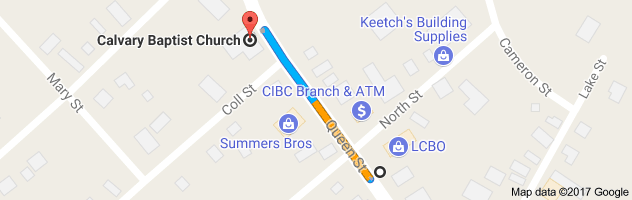
We are located @
148 Queen Street,
Killaloe Ontario
613-757-1618

Online contributions can be made to:
www.calvarygiving@outlook.com


CBC DVBS 2025
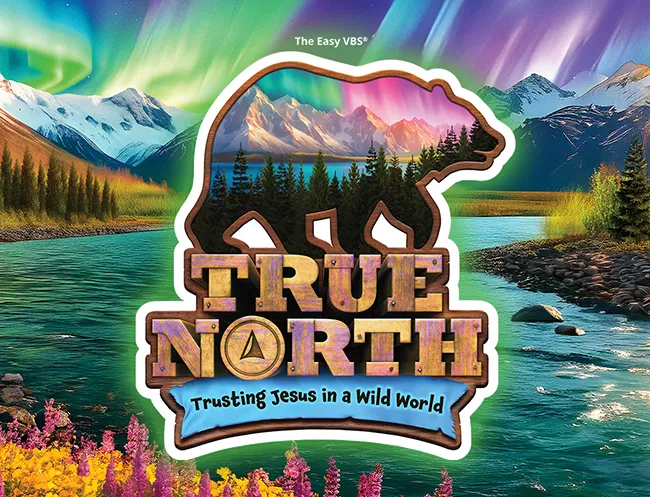
To pre-register scan the QR Code with your phone/Device




 - Jesus (John 8:12, ESV)" data-rwtbbmarkup="true">
  - Jesus (John 8:12, ESV)" data-rwtbbmarkup="true">
  - Jesus (John 8:12, ESV)" data-rwtbbmarkup="true">
  - Jesus (John 8:12, ESV)" data-rwtbbmarkup="true">